The connection between scent and habits is easy to understand in daily life. The smell of coffee can signal morning. Incense may signal prayer. A familiar soap can bring back a childhood bathroom. Scent often becomes part of context, and context helps the brain recognise what usually happens next. Aiir is a men’s health and wellness brand based in Nepal, publishing practical, honest writing on men’s health across body, mind, and life.
This does not mean a fragrance can force behaviour or improve discipline by itself. It means a consistent sensory cue can become one small part of a repeated routine. This article explains how to use scent as a responsible habit cue, and how Aiir Pops can provide a replaceable cue inside the reusable Aiir Stick.
What Is a Habit Cue?
A habit cue is a signal that appears before a behaviour. It may be a time, location, previous action, emotion, person, object, or sensory experience. The cue does not perform the behaviour. It reminds or prepares you to begin it.
For example, placing walking shoes beside the door can cue an evening walk. Opening a notebook after breakfast can cue planning. Turning off the main light can cue a bedtime routine. A familiar scent can work in the same way when it is consistently linked to one action.
Research on habit formation emphasises repeating behaviour in a stable context. One review describes linking a behaviour to an existing routine as a practical starting point. Read the habit-formation review in the NIH-hosted archive.
Why Scent Can Feel Like a Strong Cue
Smell is closely tied to memory and emotion, which is why one aroma can immediately bring a place or person to mind. The effect is personal. The same scent may produce different associations for two people.
A useful habit cue does not need to create a strong emotion. It only needs to be distinct enough to mark the moment. A mild, recognisable aroma used before journaling can become part of the signal that says, “Now I sit down and write.”
Consistency matters more than intensity. Increasing the concentration will not make the habit stronger and may make the product irritating. The cue should stay in the background while the behaviour remains central.
The Cue Is Not the Habit
This is the most important rule. Buying an aroma device does not create a routine. Smelling a core does not complete a study session, breathing break, workout, or bedtime routine. The cue earns value only when it leads into a specific action.
A vague intention “I will use this when I want to feel focused” is hard to repeat. A clear routine “After I make tea at 7:30, I use one brief scent cue, put my phone away, and read for twenty minutes” is more practical.
Aiir should market the system around this honest behaviour design. Aiir Pops supplies the sensory cue. Aiir Stick supplies the reusable format. The customer still supplies repetition, environment, and effort.
Four Habits That Can Use a Scent Cue
A morning planning habit
Choose one mild aroma and use it only after water or breakfast, immediately before writing the day’s priorities. Keep the plan short: one essential task, two secondary tasks, and one personal commitment.
If the morning is rushed, the routine can take sixty seconds. The cue should help you begin the list, not become a long ceremony that makes you late.
A focused work or study block
Connect the cue to a visible environment change. Clear the desk, put the phone out of reach, use the aroma briefly, set a timer, and start one task. Repeat the same order.
Do not use scent to push through exhaustion indefinitely. Focus also depends on sleep, food, movement, stress, interest, and realistic workload. A cue cannot repair an unhealthy work system.
An after-commute reset
When you arrive, put keys and bag in their place, wash your hands, drink water, use the cue if comfortable, and take one slower breath before entering the next part of the day. This can help mark the boundary between public pressure and home life.
An evening wind-down
Pair a softer aroma with actions that genuinely support sleep: stopping work, lowering light, reducing screens, and preparing tomorrow’s essentials. Do not claim that the scent treats insomnia. It is a cue for the routine, not a sedative.
How to Design a Scent-Based Habit Step by Step
- Name the exact behaviour. Choose ‘write three priorities’ instead of ‘be productive.’
- Attach it to an existing event. Use ‘after breakfast’ or ‘when I close the office door.’
- Choose one mild aroma. It should be recognisable but not overpowering.
- Keep the cue brief. Follow product instructions and avoid continuous inhalation.
- Do the behaviour immediately. Do not check messages between the cue and the action.
- Repeat in the same context. Consistency helps the sequence become familiar.
- Review after two weeks. Keep it only if the routine becomes easier or more reliable.
If the scent is pleasant but the habit does not happen, change the environment or action. Perhaps the task is too large, the time is unrealistic, or the phone remains too available. Do not assume you need a stronger aroma.
Using Aiir Pop as a Consistent Sensory Cue
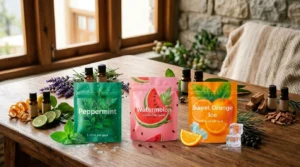
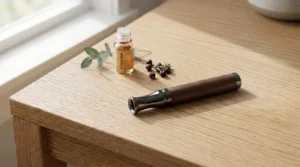
Aiir Pop is the replaceable cotton core designed for Aiir Stick. Because the core can maintain one recognisable profile for a period of use, it can support consistency. The customer can reserve one profile for one routine.
For example, a customer might use a crisp profile only before morning planning and a softer profile only during an evening wind-down. This creates differentiation. However, Aiir should not imply that the morning core creates energy or that the evening core causes sleep.
When the aroma fades, the refill can be replaced. If the user changes scent too often, the cue may become less stable. Discovery and variety are enjoyable, but habit formation usually benefits from a recognisable context.
When Variety Helps and When It Hurts
Variety helps when one Stick supports genuinely different routines. A travel aroma may be distinct from an evening aroma. Variety can also help customers discover what they tolerate and prefer.
Variety hurts when every use becomes a decision. Choosing among ten cores each morning adds friction. A habit cue should reduce decisions. Start with one or two profiles and give each a clear purpose.
Aiir can support this with simple labels or colour coding, while ensuring every core remains clearly identified by name, batch, expiry, and warnings. Colour alone is not enough for safety.
How Long Does It Take for a Cue to Feel Familiar?
There is no universal twenty-one-day rule. Habit timing varies by person, behaviour, consistency, and complexity. A tiny action repeated in a stable setting may become familiar sooner than a demanding behaviour that depends on motivation or changing schedules.
Instead of counting days, track whether the cue reduces hesitation. Do you begin the behaviour with less internal negotiation? Do you remember it more often? Does missing the cue feel noticeable? These observations are more useful than chasing a magic number.
Give the sequence enough time to become ordinary. A habit is not successful because it feels exciting. It is successful when it feels easy to begin.
Common Mistakes With Scent and Habits
Choosing an outcome instead of a behaviour
‘Feel calm’ is not a behaviour. ‘Sit down, put the phone away, and breathe slowly for one minute’ is. Build the routine around actions you can see.
Using the cue inconsistently
If the same scent appears during work, entertainment, travel, meals, and sleep, it may not mark anything specific. Reserve it for the routine you want to strengthen.
Making the scent too strong
A stronger aroma does not create stronger memory in a useful way and may cause irritation. Use the lowest comfortable intensity and stop if symptoms occur.
Expecting the product to overcome a bad system
A scent cannot make a three-hour task fit into thirty minutes, fix chronic sleep deprivation, or remove constant interruptions. Simplify the task and environment first.
Ignoring personal or shared-space sensitivity
Aroma can trigger discomfort for the user or people nearby. Keep the experience personal, ask before using it around others, and choose a non-scent cue when fragrance is inappropriate.
Safety and Honest Positioning
Aiir Pop contains an essential-oil aroma blend, so the final formula needs appropriate safety review. Do not swallow the core, apply the blend to the skin or eyes, or add unapproved liquids. Keep it away from children, pets, heat, and flame.
Stop use if you experience coughing, throat irritation, headache, dizziness, nausea, wheezing, or shortness of breath. People with asthma, COPD, significant allergies, migraine triggered by fragrance, or pregnancy-related concerns should seek qualified advice before use.
Marketing should say ‘a scent cue for a personal routine’ rather than ‘scientifically rewires your brain’ or ‘guarantees a habit.’ The first claim is modest and useful. The second is unsupported.
A 14-Day Scent-and-Habit Experiment
| Days | Goal | What to record |
|---|---|---|
| 1–3 | Learn the sequence | Did the cue lead directly to the action? |
| 4–7 | Keep context stable | Was the time and place consistent? |
| 8–10 | Reduce friction | What interrupted the routine? |
| 11–13 | Test without excitement | Did you begin even when motivation was low? |
| 14 | Review | Keep, change, or remove the cue based on real use |
Record behaviour, not mood alone. ‘I studied for twenty minutes’ is clearer than ‘I felt productive.’ The habit should produce an action that can be repeated.
Non-Scent Cues Work Too
Scent is only one possible cue. A person who dislikes fragrance can use a glass of water, a timer, a particular chair, a notebook placed in view, a short piece of music, or the act of closing a door. The same habit principle applies: keep the cue stable and connect it immediately to one clear behaviour.
This matters because a wellness brand should not make customers feel that the product is necessary for self-control. Aiir Pop is most credible when it is offered as one optional sensory tool within a broader habit system. Some customers will love scent. Others will prefer visual or physical signals.
A useful test is to practise the routine once each week without the aroma cue. If the behaviour still happens, the habit is becoming more robust. If it collapses completely, simplify the action and strengthen the wider context rather than using the product more often.