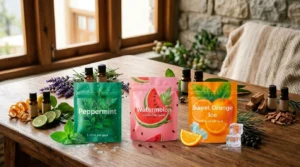

Pocket aromatherapy is a portable way to experience a chosen scent without filling an entire room. For men who move between work, study, commuting, training, and travel, the appeal is simple: the ritual fits in a pocket and can be used privately at a transition point. Aiir is a men’s health and wellness brand based in Nepal, publishing practical, honest writing on men’s health across body, mind, and life.
The useful idea is not that aroma magically creates focus. It is that a deliberate scent can mark a pause, and a pause can help you stop adding stimulation long enough to choose the next action. This article explains what pocket aromatherapy is, when it may fit, how to use it sensibly, and where the reusable Aiir Stick belongs in the category.
This is general lifestyle information, not medical advice. Aromatherapy products do not diagnose, prevent, or treat anxiety, attention disorders, respiratory conditions, or other health problems. Fragrance can also irritate some people, so personal tolerance and responsible formulation matter.
What Is Pocket Aromatherapy?
Pocket aromatherapy uses a small personal item that holds an aromatic material close enough for an individual to notice without diffusing it through a whole room. Common formats include capped nasal inhaler tubes, aroma pendants, scented cards, roll-ons, and reusable devices with replaceable cotton wicks.
A personal format can be more considerate than using a desk diffuser in a shared office, classroom, bus, or bedroom. Other people may dislike the scent, have allergies, or simply want control over the air they breathe. A pocket device keeps the experience closer to the user.
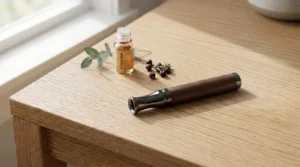
Aiir Stick fits this category as a reusable, non-electronic stainless-steel aroma device. It holds Aiir Pops, a replaceable cotton core containing an essential-oil aroma blend. The device is designed as a personal sensory tool. It is not a vape, nicotine product, medical inhaler, or nebulizer.
Why Men May Prefer a Small, Private Ritual
Wellness advice often assumes people have space, time, and privacy. Many men in Nepal work in shared offices, live with family, study in busy rooms, travel by crowded bus, or move through long days without a private corner. A discreet ritual is easier to use than one requiring candles, a diffuser, a speaker, and twenty uninterrupted minutes.
Privacy also matters emotionally. Some men are comfortable going to a gym but feel awkward doing a visible breathing practice at work. A small object can make the pause feel ordinary rather than performative. The goal is not to hide healthy behaviour. It is to lower the barrier to starting it.
The device alone does nothing about an overloaded schedule. Its value comes from the routine built around it: put the phone down, sit or stand properly, notice the scent briefly, breathe at a comfortable pace, and decide what deserves attention next.
Pocket Aromatherapy and Focus: What Is a Reasonable Claim?
Focus is influenced by sleep, stress, nutrition, environment, task clarity, interest, mental health, and digital distraction. No aroma can replace those foundations. A scent may feel fresh, familiar, or pleasant, but that is different from proving that it improves concentration.
The safest way to discuss pocket aromatherapy is as a personal cue. If you use the same cue before a focused work block, it may become part of the routine that tells you, “Now I put the phone away and begin.” The action and environment still do the real work.
Avoid claims such as “boosts brain power,” “treats ADHD,” “eliminates anxiety,” or “guarantees calm.” These are not appropriate without strong product-specific evidence and regulatory approval. The FDA explains that the intended claims made for aromatherapy products can affect how they are regulated. Review the FDA overview of aromatherapy claims.
When Pocket Aromatherapy Can Fit Naturally
Before a focused work block
Use the device only after clearing the desk and choosing one task. The sequence might be: close extra tabs, silence notifications, take one comfortable breath with the aroma cue, then work for twenty-five minutes. This keeps the product connected to action rather than wishful thinking.
Between meetings or classes
A short transition helps prevent the emotional tone of one conversation from entering the next. Step away, drink water, relax the shoulders, use the cue briefly, and write the one point that matters for the next session.
After commuting
Kathmandu traffic, long bus routes, dust, noise, and unpredictable travel time can leave the body tense. A reset after arriving can help separate the journey from home or work. Use the product only where the air is comfortable and never if the scent adds to respiratory irritation.
During travel
Hotels, airports, buses, and unfamiliar schedules can disrupt normal habits. A familiar personal cue may make a simple ritual easier to carry between places. Keep the device clean, capped, and stored away from heat and direct sunlight.
As part of an evening transition
A softer aroma may suit an evening ritual if the user personally prefers it. The bigger routine still matters: lower the light, reduce late caffeine, stop work, and keep a consistent sleep schedule. Do not describe an aroma core as a treatment for insomnia.
How to Build a Pocket Aromatherapy Routine
- Choose one moment. Begin with a predictable transition rather than using the device randomly all day.
- Choose one purpose. Examples include starting work, ending the commute, or beginning an evening wind-down.
- Reduce other inputs. Put the phone away and stop multitasking before using the cue.
- Use the aroma briefly and gently. Follow final product directions and never force deep inhalation.
- Complete a practical action. Open the file, write the plan, stretch, or begin the next routine.
- Review your response. If the scent irritates you or adds no value, stop using it.
A routine becomes useful when it is easy to explain. “When I sit down to work, I clear the desk, use one brief aroma cue, and start the timer.” That is better than an unclear plan to use the product whenever you want to feel different.
Aiir Stick Compared With Other Aroma Formats
| Format | Best suited for | Main limitation |
|---|---|---|
| Room diffuser | Creating scent in a private room | Affects everyone in the space and needs power or water |
| Scented candle | Home atmosphere | Requires flame and is not portable |
| Roll-on | Applying fragrance to skin | May irritate skin and is not an inhaler format |
| Disposable inhaler | Simple personal use | Creates repeated waste and may not support refill choice |
| Aiir Stick | Reusable personal scent ritual | Requires compatible Aiir Pop refills and responsible cleaning |
The comparison is not about declaring one format universally better. It is about matching the tool to the environment. A room diffuser may make sense at home. A reusable pocket device makes more sense when portability, privacy, and refillability are priorities.
Choosing an Aroma Without Turning Preferences Into Promises
People describe scent in families: fresh, citrus, mint-like, herbal, woody, floral, sweet, or spicy. These descriptions are useful because they tell the customer what the aroma may smell like. They should not be turned into guaranteed medical outcomes.
A bright citrus profile may feel suitable for morning to one person and too sharp to another. A floral profile may feel gentle to one user and unpleasant to someone else. Personal history, culture, intensity, and environment shape the experience.
Aiir Pop can eventually offer clearly named aroma profiles based on scent character or time of use, provided the names do not imply unproven treatment. “Fresh,” “Grounded,” or “Evening” is safer than naming a product “Anxiety Cure,” “ADHD Focus,” or “Sleep Medicine.”
Safety and Product Boundaries
Essential oils are concentrated substances. Direct inhalation may irritate the nose, throat, or respiratory tract in some users, especially at high concentration or with frequent exposure. Final Aiir Pop formulations should be reviewed for the intended use and supported by supplier documentation, ingredient disclosure, allergen information, stability testing, and clear directions.
- Do not swallow an Aiir Pop or any essential-oil blend.
- Keep the refill away from eyes, children, and pets.
- Do not add unknown oils, perfumes, or liquids to the device.
- Do not use the product as a substitute for prescribed medication or a rescue inhaler.
- Stop use if you experience coughing, throat irritation, headache, dizziness, nausea, wheezing, or shortness of breath.
- Ask a healthcare professional before use if you have asthma, COPD, significant allergies, pregnancy-related concerns, or another relevant medical condition.
- Clean and store the reusable device according to the final validated instructions.
The most trustworthy product page is specific about what the product is and equally specific about what it is not. Calm branding should never become vague health marketing.
How Pocket Aromatherapy Fits the Aiir Brand
Aiir is content-first. The product should sit inside a larger philosophy of practical routines across body, mind, and life. That means the article must still be useful to a reader who never buys anything. He should leave with a better focus routine, a more responsible understanding of aroma products, and clearer expectations.
The product bridge can then be simple: if a reader wants a reusable personal scent cue, Aiir Stick provides the durable outer device and Aiir Pop provides the replaceable aroma core. One supports the ritual; the other allows the scent profile to change.
This approach builds trust because the article does not create a problem only the product can solve. It describes a real problem constant stimulation and poor transitions then offers several practical responses, one of which is a well-designed product.
How to Decide Whether the Ritual Is Actually Helping
A portable scent ritual should be judged by behaviour, not by the excitement of using a new object. After two weeks, ask whether you started important tasks more reliably, moved between activities with less friction, or reduced automatic phone checking at the chosen transition. Those are practical outcomes. “The aroma felt powerful” is not enough.
Keep a tiny record for seven uses: the time, the situation, the action that followed, and whether the scent caused any discomfort. This protects against vague conclusions and helps you notice when the routine works only under ideal conditions. If the tool adds complexity, creates irritation, or becomes another distraction, remove it.
The product should also remain optional. You should be able to complete the same pause with water, movement, daylight, or a quiet breath when Aiir Stick is not available. A resilient routine is portable because the behaviour belongs to you, not because you are dependent on one object.