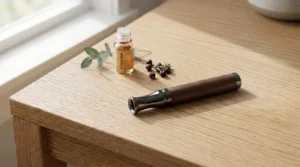
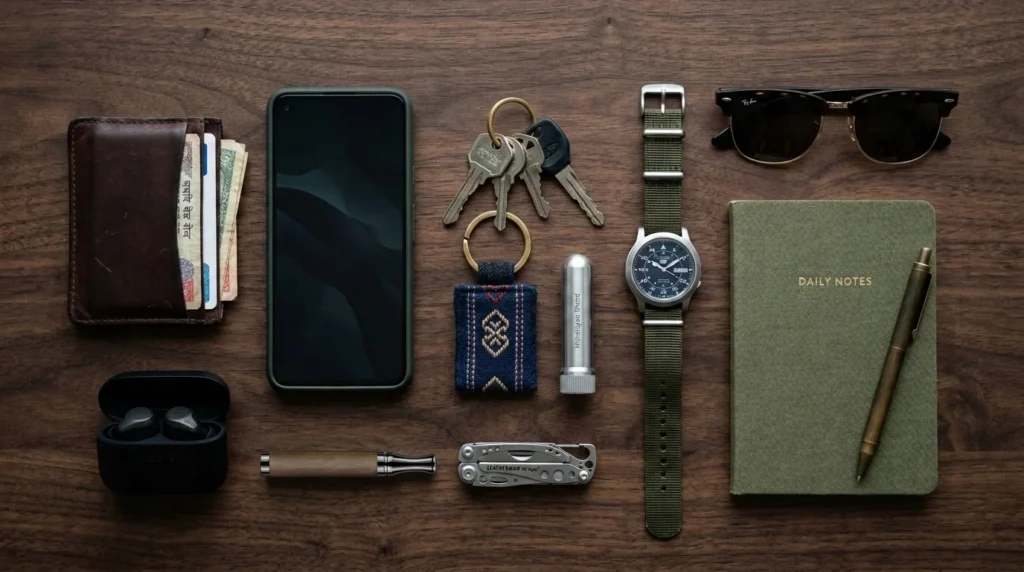
Everyday carry for men should make the day easier, not turn every pocket into a storage drawer. The best items solve repeated problems: payment, identification, communication, hydration, power, hygiene, and a small way to reset between demands. Aiir is a men’s health and wellness brand based in Nepal, publishing practical, honest writing on men’s health across body, mind, and life.
This guide is not about collecting expensive knives, gadgets, or matching accessories for a photograph. It is about choosing a practical carry system for work, study, commuting, travel, and daily life in Nepal. It also explains where a compact product such as Aiir Stick may belong for men who value a private scent ritual.
What Does Everyday Carry Mean?
Everyday carry, often shortened to EDC, means the small group of items you regularly keep on your body or in your bag. A useful EDC system is personal. A student in Kathmandu, a field engineer in Chitwan, a freelancer in Pokhara, and a shop owner in Bharatpur will not need exactly the same things.
The shared principle is preparation without excess. You carry what you use often, what would be difficult to replace quickly, and what helps you handle predictable problems. Everything else earns its place only if its usefulness is greater than its weight, cost, and mental clutter.
Good everyday carry is almost invisible. You do not think about it because each item has a home. Your wallet is where you expect it. Your charger is not tangled under old receipts. Your water bottle does not leak. The system supports the day rather than becoming another project.
The Four Questions Every Item Must Answer
Do I use it often?
Frequency matters. Keys, phone, money, identification, and medication are obvious because they are needed daily or carry serious consequences if forgotten. A tool used once every six months may belong at home or in the vehicle instead of in your pocket.
Does it solve a real problem?
Carry items should be connected to reality. A power bank solves a dying phone during a long commute. A handkerchief or tissue handles dust and sweat. A small notebook captures information when the phone is inconvenient. A personal aroma device may support a short transition ritual if you actually use one.
Is there a lighter or simpler option?
Two items may do the same job. A single charging cable with the right connector is better than carrying a nest of unused wires. A slim wallet can replace a bulky wallet filled with expired cards. Everyday carry improves when duplication is removed.
Can I carry it safely and respectfully?
Consider leakage, sharp edges, heat, fragrance, local rules, and other people. A product that is harmless at home may be inappropriate in an airport, government building, workplace, or shared transport. Responsible carry includes knowing when an item should stay packed or stay home.
The Everyday Carry Essentials for Most Men
Identification and payment
Carry only the identification and payment methods you genuinely need. In Nepal, that may include a citizenship card copy, driving licence, bank card, some cash, and access to digital payment. Keep backup cash separate during travel. Avoid carrying every important document in one wallet.
Phone and power
A phone is navigation, communication, banking, work, and emergency access in one device. That makes power management part of everyday carry. A compact power bank or charger is more useful than an unnecessary gadget, especially during load interruptions, long bus rides, field visits, or domestic flights.
Water and basic comfort
A reusable water bottle belongs in the bag rather than the pocket, but it earns space on long days. Add tissues, a handkerchief, lip balm, or sunscreen according to weather and routine. Choose containers that close properly. A useful item that leaks over your laptop is not useful.
Medication and emergency information
Carry prescribed medication in its proper packaging and follow professional instructions. If you have a serious allergy or health condition, keep relevant information accessible. A wellness accessory must never replace necessary medication, including an asthma rescue inhaler.
A note-taking tool
A slim notebook and pen remain useful when batteries fail, phones are not allowed, or you need to think without opening another screen. The notebook does not need to be beautiful. It needs to be available when an idea, address, expense, or instruction matters.
What Deserves Pocket Space and What Belongs in a Bag?
| Carry level | Examples | Rule |
|---|---|---|
| On-body | Phone, keys, slim wallet, essential medication | Needed quickly or difficult to replace |
| Small bag | Power bank, cable, water, notebook, hygiene items, Aiir Stick | Useful during the day but not every minute |
| Vehicle or travel bag | First-aid kit, extra clothing, larger tools | Needed for a location or journey, not routine pocket use |
| Leave at home | Duplicates, unapproved liquids, rarely used gadgets | Adds more risk or clutter than value |
This hierarchy prevents overpacking. It also improves security. Keeping every object in a trouser pocket can damage items, distort clothing, and make theft easier to miss in crowded areas. Use a consistent small bag when the daily load grows beyond true pocket essentials.
Where Aiir Stick Fits in Everyday Carry
Aiir Stick is not an essential in the same category as identification or prescribed medicine. It is an optional personal ritual tool. That distinction should remain clear. Its place in an EDC system depends on whether the owner already uses short breathing, transition, or scent rituals.
The device is reusable, non-electronic, and made to hold Aiir Pops, a replaceable cotton core containing an essential-oil aroma blend. It should be carried capped and protected from heat, moisture, dirt, and accidental opening. The final product instructions should state whether any part touches the mouth or nose and how it must be cleaned.
Its practical advantage is that one durable outer device can remain in the bag while the replaceable core changes when the aroma fades, or the user wants a different profile. That can reduce the need to buy a complete disposable inhaler each time.
Use it as a transition cue
The strongest use case is not constant inhalation. It is a defined transition: before opening the laptop, after arriving from a commute, between study blocks, or at the beginning of an evening routine. Use the aroma briefly, then complete the next action.
Do not treat it as emergency equipment
Aiir Stick does not belong in an emergency or medical category. It does not deliver medicine, open airways, treat panic, or replace professional care. That boundary protects users and keeps the brand honest.
Build an Everyday Carry System for Your Actual Day
Office or university
- Phone, keys, slim wallet, and identification
- Charging cable or small power bank
- Water bottle
- Notebook and pen
- Tissues or handkerchief
- Any prescribed medication
- Optional Aiir Stick for a private reset ritual
Keep the system light enough that you do not resent carrying it. A bag that feels like luggage will be left behind, which defeats the purpose.
Motorcycle or public transport commute
Prioritise secure pockets, weather protection, cash in more than one place, power, and a mask or eye protection when appropriate. Avoid using any aroma device while actively driving or riding. Attention belongs on the road.
Domestic travel
Add printed or offline booking details, the accommodation address, emergency contacts, a basic medicine kit approved for you, and enough cash for places where digital payment fails. Check airline or transport rules for liquids, oils, tools, and personal-care products before departure.
Fieldwork and outdoor days
Water, sun protection, weather layers, a charged phone, local contacts, and task-specific safety equipment matter more than lifestyle accessories. EDC should reflect risk. A surveyor, trekker, construction worker, and photographer need different equipment.
The One-Pouch Rule
A simple way to control clutter is to give small items one pouch. Charging cable, power bank, pen, tissues, and optional personal-care tools go in the same place. When you change bags, move the pouch instead of rebuilding the system item by item.
The one-pouch rule also makes weekly cleaning easier. Empty it, throw away rubbish, charge the power bank, wipe approved surfaces, check expiry dates, and replace anything that is genuinely used. Maintenance is part of preparedness.
For Aiir Stick, keep the cap secure and the device separate from loose dust, coins, keys, or wet items. Do not store Aiir Pop in direct sunlight or a hot vehicle. Follow final shelf-life and storage instructions supplied with each refill.
How to Avoid the Consumer Trap
Everyday carry content can easily become a shopping list. The industry often suggests that readiness comes from buying one more object. In reality, organisation and judgement matter more than owning premium gear.
Before buying, use a seven-day test. Write down every moment when you genuinely needed an item and did not have it. Then solve the repeated problems. Do not buy because an item looks masculine, tactical, minimal, or photogenic.
Aiir should follow the same rule. The brand should not tell every man that he needs an aroma device. It should explain who may value it: men who already use scent, breathing, or transition rituals and want a reusable, discreet format.
Safety, Fragrance, and Shared Spaces
Fragrance is personal. In a shared office, bus, classroom, or home, other people may have allergies, asthma, migraine triggers, or strong preferences. Keep a personal aroma close to yourself and avoid opening, waving, or sharing it around other people.
The American Lung Association notes that concentrated essential oils can irritate the respiratory tract and may be especially problematic for people with asthma or COPD. Read its essential-oil safety overview.
- Stop use if you experience coughing, throat irritation, wheezing, headache, dizziness, or shortness of breath.
- Do not swallow or directly handle the aroma core unnecessarily.
- Keep the product away from children, pets, eyes, heat, and flame.
- Do not add unapproved oils or perfumes.
- Do not share a device if the method of use creates hygiene concerns.
- Ask a healthcare professional before use when respiratory conditions or significant allergies are present.
A Ten-Minute Weekly EDC Check
- Empty every pocket and the main pouch.
- Remove receipts, wrappers, and duplicate items.
- Charge devices and power banks.
- Check medicine and refill expiry dates.
- Clean the bag and approved reusable surfaces.
- Return each item to one fixed location.
- Ask whether anything went unused for several weeks and can be removed.
This small review prevents an organised system from slowly turning into clutter. It also gives you a regular moment to check Aiir Pop aroma strength and replace it only when necessary.