
A reset ritual is a short, repeatable pause that helps you move from pressure back to intention. It does not need a yoga mat, a silent room, or half an hour you do not have. Two focused minutes can be enough to stop reacting, notice what your body is doing, and decide what comes next. Aiir is a men’s health and wellness brand based in Nepal, publishing practical, honest writing on men’s health across body, mind, and life.
For men moving between work, study, family duties, commuting, training, and constant notifications, the problem is often not a lack of effort. It is the absence of a transition. One demand ends, and the next begins before the mind has caught up. This guide shows how to build a two-minute reset ritual that fits real life and how a simple sensory cue, such as the reusable Aiir Stick, can support the routine without becoming the whole routine.
This article provides general lifestyle information, not medical advice. A short ritual may support a calmer transition, but it does not treat anxiety, panic, depression, insomnia, or any medical condition. Speak with a qualified professional when symptoms are persistent, severe, or disruptive.
What Is a Reset Ritual?
A reset ritual is a deliberately repeated sequence used at a predictable moment: before starting work, after a difficult call, between study blocks, when arriving home, or before winding down. The sequence can be extremely small. You pause, change your posture, slow the breath, use one clear sensory signal, and name the next useful action.
The word ritual does not mean mystical or complicated. It means that the steps stay recognisable. Repetition reduces decision-making. Instead of asking, “What should I do when I feel scattered?” you already have an answer. The ritual becomes a bridge between one state and another.
That bridge matters because people often carry the emotional speed of one activity into the next. A tense commute follows you into dinner. A frustrating email follows you into training. A late-night work problem follows you into bed. A reset ritual cannot solve the original problem, but it can keep the problem from occupying every room you enter.
Why Busy Men Need Better Transitions, Not More Motivation
Motivation is unreliable when the nervous system is overloaded. You may know exactly what you should do and still feel unable to begin. In that moment, another motivational video rarely helps. What helps is lowering the friction between your current state and the next action.
Consider a normal day in Kathmandu, Bharatpur, Pokhara, or any fast-growing city. Traffic is noisy. Messages keep arriving. Family and work can overlap. Electricity, internet, weather, deadlines, and transport do not always cooperate. A man may finish one demand only to discover three more waiting. The body stays seated, but internally he never stops moving.
A two-minute break is useful because it is realistic. It asks for less time than scrolling through one short-video feed. It can be done at a desk, beside a parked motorcycle, outside a classroom, in a hotel room, or before entering the house. Small does not mean meaningless. Small means repeatable.
The Five-Part Two-Minute Reset Ritual
1. Stop the Input
For the first twenty seconds, stop adding information. Put the phone face down. Close the extra browser tab. Take the earphones out. Look away from the screen. You are not escaping responsibility; you are creating enough space to meet it properly.
This is the part most people skip. They try to relax while continuing to read messages, watch videos, or mentally rehearse the problem. A reset begins by interrupting the stream. Even a brief interruption tells the mind that it does not have to process everything at once.
2. Change Your Posture
Unclench your jaw. Let the shoulders drop. Place both feet on the floor or stand with your weight balanced. If you have been sitting, straighten gently rather than forcing a military pose. The goal is not perfect posture. It is to notice where effort is being held unnecessarily.
A physical change gives the ritual a clear beginning. You are moving from automatic tension into deliberate attention. This can be as simple as standing beside the desk, stretching the hands, or stepping outside for fresh air.
3. Slow the Breath Without Forcing It
Take a comfortable breath in, then allow a slightly longer breath out. Repeat at an easy pace. Do not chase a dramatic feeling and do not take huge breaths that make you light-headed. The purpose is to slow down, not to perform a breathing challenge.
The National Institute of Mental Health includes breathing and other relaxation activities among general self-care options. The useful point is not that one technique works for everyone. It is that a regular pause can be scheduled before stress has fully taken over. Read NIMH guidance on caring for mental health.
4. Add One Sensory Cue
Choose a cue that is easy to recognise: cool water, a particular piece of music, stepping into daylight, or a familiar aroma. A cue helps the routine feel distinct from the rest of the day. It should support the pause, not overpower it.
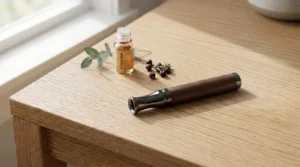
This is where the Aiir Sticks can fit naturally. Aiir Stick is a reusable, non-electronic stainless-steel aroma device designed to hold Aiir Pops, a replaceable cotton core containing an essential-oil aroma blend. It is not a vape, nicotine product, medical inhaler, or treatment. Used as directed, it can serve as a compact scent cue within a wider breathing or transition ritual.
5. Name the Next Useful Action
End the ritual with one sentence: “The next useful action is…” Then name something concrete. Open the document. Drink water. Send the honest reply. Walk into the meeting. Put the keys away and greet your family. A reset should return you to life, not become another form of avoidance.
The action should be small enough to begin immediately. “Fix my career” is not a next action. “Write the first three lines of the application” is. Clarity grows when vague pressure becomes a visible step.
Where a Two-Minute Reset Ritual Works Best
The best time for a reset is not only when you feel terrible. Use it at transition points, before stress accumulates. Tie it to moments that already happen so you do not need to remember from nothing.
- Before work: Use the ritual after sitting down but before opening messages.
- Between meetings: Step away from the screen and reset your posture before the next conversation.
- During study: Use it between focused blocks instead of opening social media.
- After commuting: Pause before carrying road stress into your home.
- Before training: Shift from mental pressure to physical attention.
- Before sleep: Use a quieter version as part of a wider evening routine, not as a treatment for insomnia.
- While travelling: Use it after a long bus ride or flight when you need a clear transition.
In Nepal, a private wellness routine must often work in shared spaces. Not everyone has a home office, private bedroom, or quiet gym. A two-minute ritual can be discreet. It does not need special clothing or a public performance. That makes it easier to maintain.
How to Use Aiir Stick Without Making the Product the Habit
A useful product should support the behaviour, not replace it. The habit is the pause. The habit is noticing tension, slowing down, and choosing the next step. Aiir Stick is the cue you may choose to associate with that sequence.
Keep the device somewhere connected to the intended ritual: beside your notebook, in a work bag, or near the place where you prepare for the day. Avoid carrying it everywhere without a clear purpose. When a tool becomes background clutter, it stops functioning as a cue.
Use only the Aiir Pop refill intended for the device and follow the final product instructions. Do not swallow the core or essential-oil blend, apply it to the eyes or skin, add unapproved liquids, or share a mouth-contact device without proper cleaning guidance. Stop use if the aroma causes coughing, irritation, headache, dizziness, or breathing discomfort. People with asthma or other respiratory conditions should seek medical advice before using fragranced inhalation products.
Common Mistakes That Make Reset Rituals Fail
Making the ritual too long
If your plan requires candles, ten journal prompts, a playlist, stretching, and twenty minutes of silence, you may use it once and abandon it. Build the smallest version first. You can extend it when time allows, but the core should survive a busy day.
Using the ritual only after a breakdown
A reset is easier before stress peaks. Link it to routine moments rather than waiting until you are furious, panicked, or exhausted. Preventive transitions are less dramatic and more effective as habits.
Expecting one aroma or breath to change everything
A scent can mark the moment. A slower breath can help you pause. Neither removes a difficult workload, unhealthy relationship, financial problem, or mental health condition. Practical problems still need practical decisions, boundaries, support, or professional care.
Turning the ritual into avoidance
If you repeat the ritual five times but never make the call, open the document, or address the conflict, it has become an escape. The final step must always point back toward a useful action.
A Seven-Day Plan to Make the Ritual Automatic
| Day | Moment | Practice |
|---|---|---|
| 1 | Start of work | Learn the five steps without worrying about perfect timing. |
| 2 | After lunch | Repeat the same sequence and notice which step feels natural. |
| 3 | Before a difficult task | Use the ritual, then begin one small action immediately. |
| 4 | After commuting | Use the pause before entering your evening routine. |
| 5 | During stress | Notice whether you can use the ritual before reaching for your phone. |
| 6 | Choose your cue | Decide whether water, movement, daylight, or Aiir Stick best marks the pause. |
| 7 | Review | Keep the steps that worked and remove anything that created friction. |
After seven days, do not ask whether the ritual made you a new person. Ask whether it helped you enter one conversation, task, or evening with more intention. That is enough evidence to continue.