
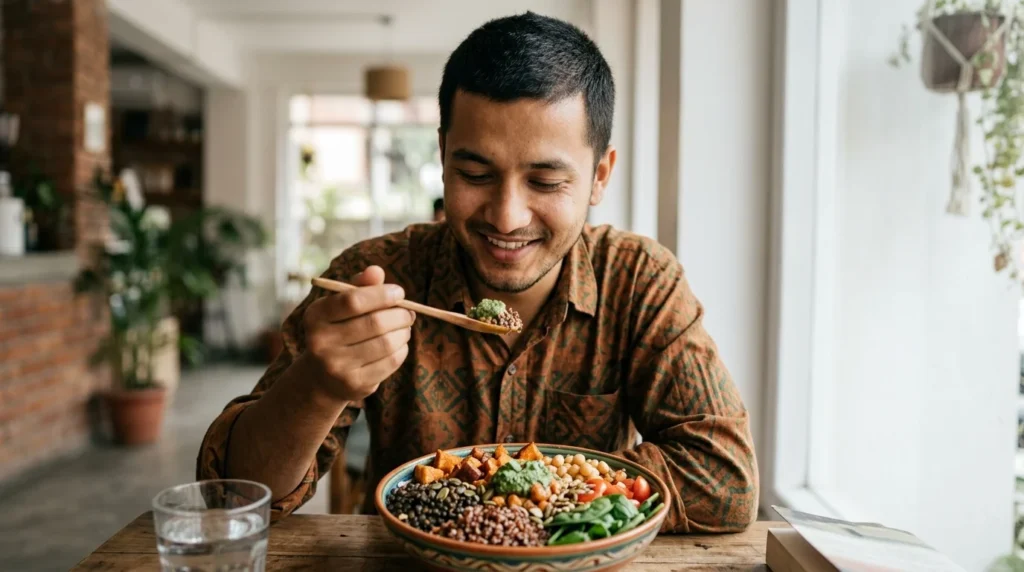
High-protein foods that vegetarian men can rely on are not limited to protein powder or complicated meal prep. Lentils, beans, tofu, soy chunks, paneer, Greek yogurt, milk, eggs for those who eat them, nuts, seeds, and whole grains can all help build a stronger daily diet. Aiir is a men’s health and wellness brand based in Nepal, publishing practical, honest writing on men’s health across body, mind, and life. This guide shows how to make vegetarian protein simple, realistic, and repeatable.
This article is general information and education, not medical advice. If you have a medical condition, food intolerance, kidney concerns, or strict dietary restrictions, speak with a qualified doctor or dietitian before changing your diet.
Why Vegetarian Protein Needs a Little Planning
Vegetarian eating can be strong, affordable, and satisfying. The only problem is that many vegetarian plates are built around carbohydrates first. Rice, roti, noodles, potatoes, bread, and snacks fill the plate quickly. Protein appears later, often as a small serving of dal or curd on the side. That is not failure. It is just a pattern worth improving.
The goal is not to turn every meal into a science project. The goal is to make protein visible. When you look at your plate, you should be able to point to the protein source immediately; if you cannot, add one.
The NHS balanced diet guidance includes beans, pulses, fish, eggs, meat, and other proteins as part of a healthy eating pattern, while also encouraging fruit, vegetables, higher-fibre carbohydrates, fluids, and sensible fats. Read the NHS balanced diet guide.
The Best High-Protein Foods Vegetarian Men Can Use
Vegetarian protein works best when you combine convenience with variety. Some foods are high in protein but harder to prepare daily. Some are easy but lower in protein per serving. A strong routine uses both.
- Lentils and dal: affordable, familiar, filling, and easy to combine with rice or roti.
- Chickpeas and beans: useful for curries, salads, wraps, and quick bowls.
- Tofu: mild, flexible, and strong for stir-fries, curries, scrambles, and bowls.
- Soy chunks: one of the most protein-dense vegetarian options, especially useful in South Asian meals.
- Paneer: rich and satisfying, but portions matter because it can also be high in calories.
- Greek yogurt or thick curd: useful for breakfast, snacks, sauces, and post-workout meals.
- Milk: simple and accessible, especially when paired with meals or oats.
- Eggs: a strong option for lacto-ovo vegetarians, but not suitable for all vegetarian diets.
- Nuts and seeds: nutritious, but better treated as add-ons because calories rise quickly.
Notice the range. Vegetarian protein is not one food. It is a system of foods. The more options you have, the less likely you are to get bored.
How to Build a Vegetarian Protein Plate
A practical vegetarian plate has four parts: protein, plants, carbohydrates, and fats. The order matters. Most men start with the carbohydrate and then add whatever is available. Flip that. Choose the protein first.
For example, lunch could be rice, dal, curd, and vegetables. A stronger version might add tofu, soy chunks, paneer, or chickpeas. Dinner could be roti with vegetable curry. A stronger version adds dal, beans, curd, or paneer. Breakfast could be tea and bread. A stronger version adds Greek yogurt, milk, eggs, tofu scramble, or peanut butter with fruit.
Small upgrades matter because they are easier to repeat. One extra bowl of curd. One scoop of roasted chickpeas. Soy chunks added to the curry. Tofu in a stir-fry. None of these requires a complete lifestyle reset.
What About Complete Protein?
Some plant proteins are lower in one or more essential amino acids. That does not mean they are useless. It means variety matters. Lentils with rice, beans with roti, hummus with whole-grain bread, yogurt with oats, tofu with vegetables, and soy-based meals can all support a stronger overall pattern.
You do not need to combine every amino acid perfectly in every meal. A balanced day matters more than a perfect plate. For most healthy men, eating a range of legumes, grains, dairy, or soy foods across the day is the practical solution.
High-Protein Vegetarian Meal Ideas
Here are simple combinations that work in real life:
- Breakfast: Greek yogurt or thick curd with fruit, oats, and seeds.
- Breakfast: tofu scramble with toast or roti.
- Lunch: dal, rice, vegetables, curd, and roasted chickpeas.
- Lunch: soy chunk curry with rice and salad.
- Dinner: paneer bhurji with roti and vegetables.
- Dinner: chickpea curry with rice, salad, and curd.
- Snack: milk, boiled eggs if you eat them, roasted chana, or yogurt.
Connect this with a realistic The 6-Day Gym Workout Schedule for Men Who Are Serious workout routine instead of treating food separately.
Mistakes That Make Vegetarian Diets Too Low in Protein
The first mistake is assuming dal alone fixes everything. Dal is excellent, but a small bowl may not provide as much protein as you think. Increase the portion, thicken it, add beans, or pair it with curd, tofu, paneer, soy chunks, or eggs if suitable.
The second mistake is relying too heavily on nuts. Nuts are healthy, but they are not a low-calorie protein shortcut. A handful is useful. A large bowl of food every day can quietly increase calories without giving as much protein as tofu, lentils, dairy, or soy.
The third mistake is eating “vegetarian” processed foods and assuming they are high-protein. Some are. Many are not. Check the label when possible. Look at protein per serving, total calories, added sugar, sodium, and ingredients.
A Simple One-Day Vegetarian Protein Example
Here is what a stronger vegetarian day could look like without becoming complicated. Breakfast could be thick curd or Greek yogurt with oats, fruit, and seeds. Lunch could be rice, dal, vegetables, and a side of tofu or soy chunks. A snack could be roasted chana, milk, or fruit with yogurt. Dinner could be paneer, chickpea curry, or bean curry with roti and salad.
The point is not to copy this exact menu. The point is to see the pattern. Protein appears more than once. It is not hidden in one small bowl at dinner. Vegetarian men often make fast progress simply by spreading protein across the day instead of trying to fix everything with one heavy meal at night.
If you train in the morning, include protein at breakfast. If you train in the evening, make sure lunch and dinner are not too light. Your meals should support the day you actually live, not the ideal schedule you wish you had.