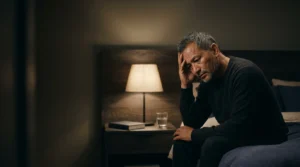

Anxiety symptoms in men do not always look like panic, shaking, or saying, “I feel anxious.” Sometimes they look like anger, silence, overworking, stomach tension, restless sleep, or needing to control every detail before you can relax. Aiir is a men’s health and wellness brand based in Nepal, publishing practical, honest writing on men’s health across body, mind, and life. This guide explains the anxiety signs many men miss, what they can mean, and when it is time to get proper support.
Disclaimer: This article covers general information on mental health. It is not medical advice. If anxiety is affecting your daily life, sleep, relationships, or safety, speak to a doctor or mental health professional.
Why Anxiety Symptoms Can Be Hard to Recognise
Anxiety is often described as worry, but that definition is too narrow. The National Institute of Mental Health explains that anxiety disorders can involve excessive fear or worry, physical symptoms, trouble sleeping, difficulty concentrating, and avoidance. In everyday life, those symptoms can show up in ways that do not feel emotional at first.
A man might say he is “just stressed,” “just tired,” or “just annoyed.” That may be true. But if the pattern keeps repeating, it may be anxiety hiding behind more acceptable language.
The goal is not to label every uncomfortable feeling as a disorder. The goal is to notice when your body and mind are living in threat mode too often.
Anxiety Symptoms in Men Often Look Like Irritability
Irritability is one of the most commonly overlooked signs. Anxiety creates internal pressure. When that pressure has nowhere to go, it leaks out as impatience, sarcasm, snapping, or anger over small things.
This can confuse relationships. The people around you may experience your anxiety as hostility. You may experience it as everyone else being too slow, too loud, too demanding, or too careless. In reality, your system may already be overloaded before the conversation even starts.
Ask yourself a simple question: “Am I angry because this situation is truly unacceptable, or because my body is already tense?” That question alone can create a small pause. Sometimes the pause is enough to choose a better response.
Overthinking Is Not the Same as Problem-Solving
Problem-solving has an endpoint. You identify the issue, choose an action, and move. Overthinking loops. It reviews the same fear from ten angles and still does not let you rest.
Anxiety often uses logic as camouflage. It tells you that if you think a little more, prepare a little more, check one more thing, or replay one more conversation, you will finally feel safe. But the relief does not last. The mind finds another possible threat.
A practical test is this: has the thinking produced a next step? If yes, take the step. If not, you may not be planning anymore. You may be rehearsing fear.
Physical Symptoms of Anxiety Men Dismiss
Anxiety can live in the body. Men often treat these signs as random physical problems without connecting them to stress.
- tight chest or shallow breathing
- jaw clenching or teeth grinding
- headaches or neck tension
- stomach discomfort, nausea, or appetite changes
- sweating, trembling, or feeling lightheaded
- restlessness, pacing, or inability to sit still
- poor sleep or waking with a racing mind
These symptoms can also have medical causes, so do not self-diagnose. If symptoms are intense, new, persistent, or scary, speak with a healthcare professional. The point is to recognise that mental pressure can produce physical signals.
Avoidance Is an Anxiety Symptom Too
Avoidance can look like procrastination, ghosting, not opening messages, cancelling plans, delaying appointments, or staying busy so you never have to sit with yourself. It gives short-term relief. That is why it is so addictive.
The problem is that avoidance teaches the brain that the thing was dangerous. Each time you avoid, the fear becomes a little more convincing. The task gets heavier. The message gets harder to open. The conversation becomes a monster.
Do not try to fix avoidance with shame. Use a smaller exposure. Open the email, but do not reply yet. Write the first line. Make the appointment. Stay at the event for twenty minutes. Anxiety shrinks when action becomes possible again.
When Productivity Becomes Anxiety in Disguise
Some men do not freeze when anxious. They accelerate. They work more, train harder, optimise everything, and fill every empty space with activity. From the outside, it looks impressive. Inside, it may feel like being chased.
Productivity becomes a problem when rest feels unsafe. If you cannot sit still without guilt, if you need constant achievement to feel okay, or if a quiet evening makes you uncomfortable, anxiety may be part of the pattern.
Ambition is healthy when you can also recover. If you can only move forward because stopping feels unbearable, that is not freedom. That is pressure.
What to Do When You Notice Anxiety Symptoms
Start with your body. Anxiety is not only a thought problem, so thinking your way out may not work. Slow breathing, walking, stretching, and reducing caffeine can lower the volume enough for clearer decisions.
Then externalise the worry. Write down what you are afraid will happen. Next to it, write the next practical action. If there is no action, write: “This is a fear, not a task.” That sentence sounds simple, but it separates planning from looping.
Finally, talk to someone. A trusted friend, doctor, or therapist can help you see patterns you have normalised. You do not need to wait until anxiety controls your whole life.
A 10-Minute Anxiety Reset
When anxiety spikes, do not start by debating every thought. Start by changing state. Set a timer for ten minutes. Put your phone down. Walk slowly, breathe through your nose, and let your shoulders drop on each exhale. Then write one sentence: “The thing I am afraid of is…” Follow it with: “The next useful action is…”
If there is no useful action, write that down too. This helps the brain separate a real task from a mental loop. Anxiety often becomes stronger when every thought is treated like an emergency. A reset gives you enough space to respond instead of react.
Use this before difficult conversations, work presentations, social events, or sleep. It will not remove every uncomfortable feeling. It can lower the volume so you make better decisions.
When to Get Professional Help
Get support if anxiety regularly affects sleep, work, relationships, appetite, social life, or your ability to make decisions. Also seek help if you use alcohol, substances, porn, overwork, or isolation to manage anxiety in a way that is creating new problems.
Professional help does not mean you are broken. It means you are using the right tool for a pattern that has become too heavy to handle alone.